
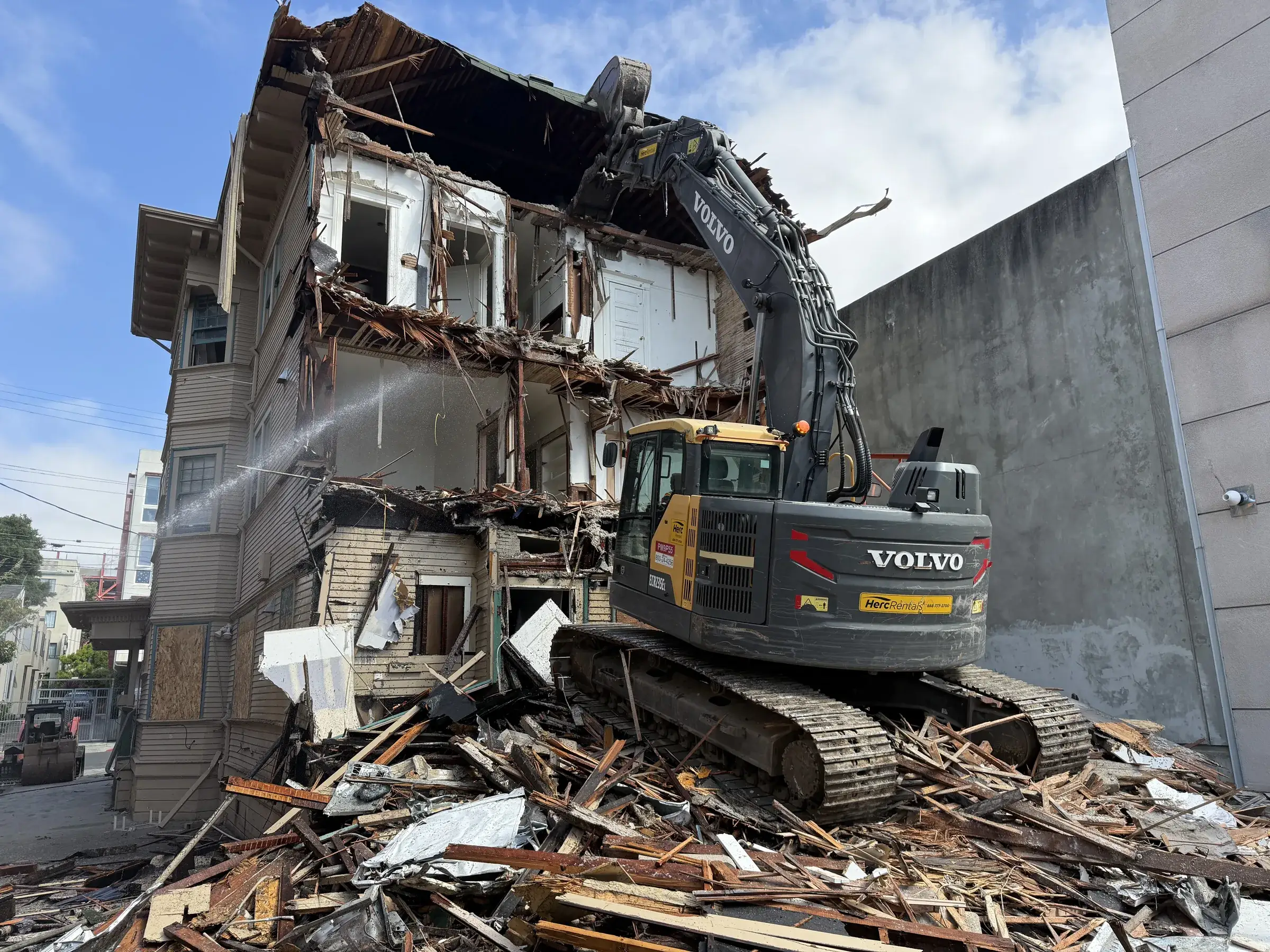
Sacramento Pre-Demolition Checklist:
What to Line Up Before Demo Day.
The teardown takes a day. The preparation takes weeks, and the order you do it in decides which. Here are the seven things to line up on a Sacramento demolition, and which ones we take off your plate.
Reviewed by Spencer Farman, licensed California demolition contractor (CA Contractor #1117491). Updated August 17, 2026.
Key takeaways
- Your jurisdiction sets everything downstream. Sacramento County runs about $250 with a waste management plan. The City of Sacramento runs $300 and up with more departments and 1 to 2 months of lead time.
- Pre-1980 structures need an asbestos survey and SMAQMD clearance with a 10 day waiting period before demo.
- SMUD and PG&E can start scheduling disconnects from the permit application number, so utility lead time runs alongside permit review instead of after it.
- Decide what stays before demo day: foundation, utility connections, trees, and anything you want salvaged.
The Seven Item Pre-Demolition Checklist
A demolition is a regulated sequence, not just a machine and a dumpster. Each item below covers what it is, why it matters in Sacramento, and who handles it.
1. Confirm Your Jurisdiction: City or County
The first checklist item is a map question. Whether the property sits in the City of Sacramento or unincorporated Sacramento County decides your permit path, your cost, and your timeline.
Sacramento County keeps it simple: a permit application plus a waste management plan, usually around $250.
The City of Sacramento runs heavier. Documents must be notarized, several departments sign off through the portal, and the wrecking permit issues after planning approval. Budget $300 and up and 1 to 2 months.
City homes older than 50 years can also trigger a historical review before demolition is approved. Our Sacramento demolition permit guide walks the whole process step by step.
2. Order the Asbestos Survey Early
Every demolition in Sacramento County passes through SMAQMD, the regional air district. Pre-1980 structures need an asbestos survey from a qualified inspector before anything comes down.
SMAQMD notification describes the work and square footage and includes the survey results, then a 10 day clearance period runs before demo can start. If the survey finds asbestos, abatement and a retest happen first.
This is the checklist item that blows up timelines when it starts late. Filed early, the 10 day clock runs while your permit is still in review.
The full breakdown, including what surveys cost and how abatement works, is in our Sacramento asbestos demolition guide.
3. File the Permit and Waste Management Plan
The permit application is where the paperwork stack lives: the application itself, the waste management plan for the county, and the notarized documents for city jobs.
The waste management plan says where the debris goes and how much gets diverted from the landfill. Demo Patrol documents loads through Green Halo, so dump receipts and diversion records are digital and ready for county or city compliance checks.
Demo Patrol pulls the demolition permit on every job we run. You never have to touch the counter visit or the portal.
4. Send Utility Disconnect Requests the Day You File
Here is the sequencing trick that saves weeks. SMUD and PG&E want a demolition permit number before they schedule a disconnect, but the permit application number arrives the moment you submit.
That number is enough to get in the utility queue. Send disconnect requests the same day the permit is filed, and the utility lead time runs during permit review instead of stacking on top of it.
Water is simpler: the line gets capped at the house, no utility appointment needed. Gas meters usually come out without drama once PG&E processes the request.
Before any digging or grading, 811 utility locating marks the underground services on the lot. A shutoff switch or a closed valve is not a disconnect. Get written confirmation from each utility before equipment mobilizes.
5. Decide What Stays
A teardown does not have to mean starting from zero, but the keep-or-clear decisions have to happen before demo day, not during it.
The foundation can sometimes stay for a rebuild on the same footprint. Whether yours qualifies is an engineering question worth raising during the quote.
Utility connections usually stay when a new home is going on the same lot. We cap and protect what the rebuild needs.
Salvage is the one that hurts when it is missed. We once pulled 90 year old wooden beams out of a teardown and shipped them to the customer in Tahoe. If anything in the structure matters to you, tell us before the excavator starts.
6. Prep the Site and the Neighbors
Demolition is loud, dusty, and short. A little site prep keeps it from becoming a neighborhood event.
Plan the basics: temporary fencing around the work area, a clear equipment route in, debris staging space, and dust control during the teardown.
Give the neighbors reasonable notice of the schedule. In tighter Sacramento neighborhoods, driveway access and street parking for equipment and trucks are worth confirming in advance.
7. Lock In Demo Day and the Haul-Off
With the permit issued, clearances done, and utilities confirmed dead, demo day is the fast part. A typical 1,500 square foot house comes down in about a day.
Debris gets sorted, not just hauled. Concrete goes to crushing and recycling, metal goes to scrap, and the rest goes to the landfill, with receipts documenting each load.
The final checklist item is the walk-off: debris gone, lot graded, and paperwork closed out with the jurisdiction.
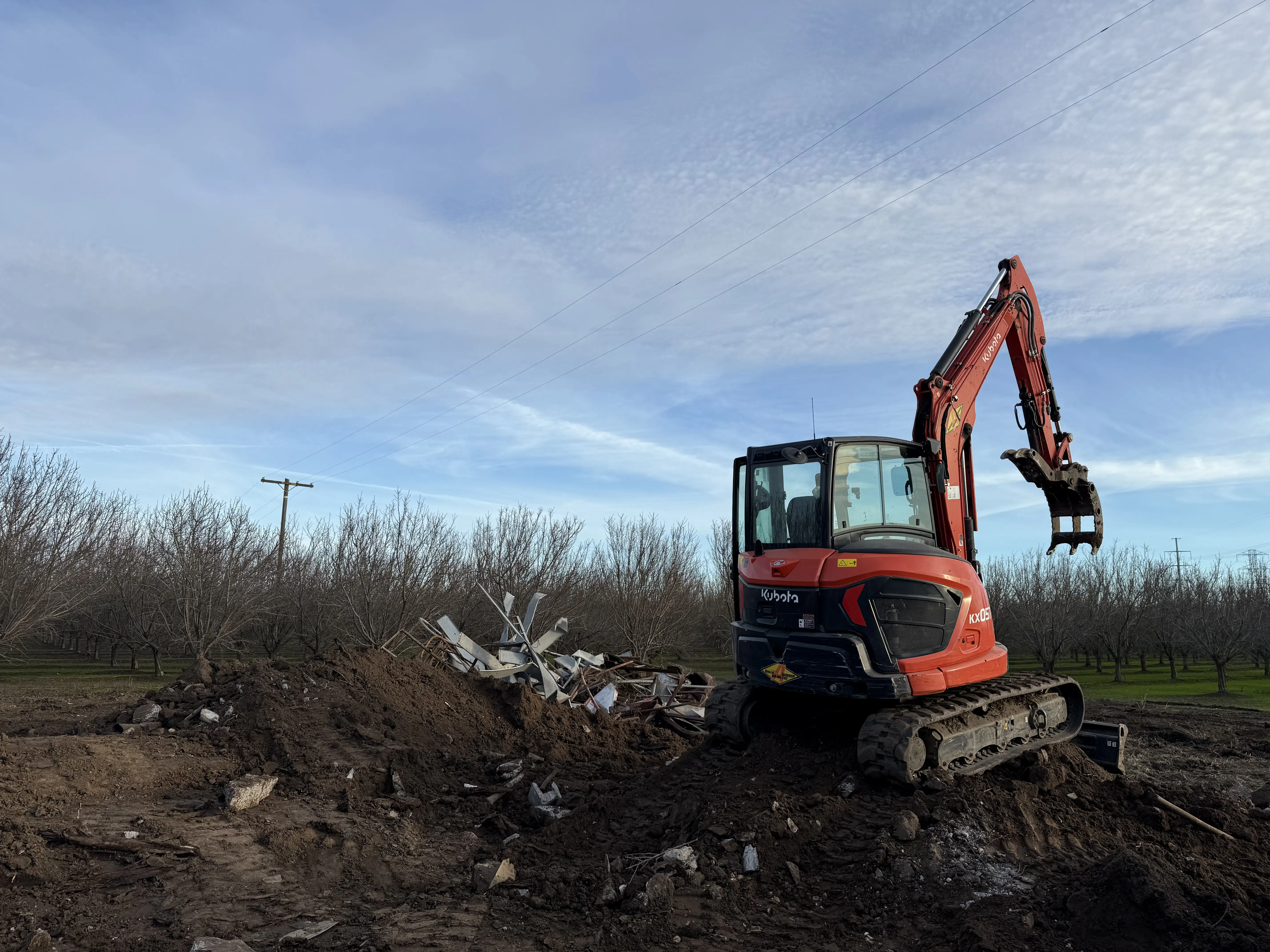
Demo day is the fast part.
Real Demo Patrol teardown, debris sorted on site.
Where the Debris Actually Goes
The waste management plan is not paperwork theater. Every load off a Demo Patrol job has a destination and a receipt.
Concrete goes to crushing and recycling. Metal goes to scrap. Mixed debris that cannot be diverted goes to the landfill, and Green Halo keeps the digital record of all of it for the jurisdiction.
That documentation matters at the end of the job, when the county or city closes out your permit against the plan you filed at the start.
Most of This Checklist Is Our Job, Not Yours
Demo Patrol is a licensed Sacramento demolition contractor. CA Contractor #1117491, OSHA-10 Certified, A+ BBB Accredited.
Of the seven items above, the permit, the air district filing, the utility coordination, the site work, and the haul-off are all inside a standard demo quote. Your decisions are the jurisdiction check, what stays on the lot, and when you want it done.
You get a written quote within 24 hours of the site walk, and work typically starts about a week out once permits allow. See Sacramento house demolition pricing for real numbers, or browse all Sacramento demolition services. For how this checklist lays out across the full project schedule, see our Sacramento demolition timeline guide. Still weighing whether to tear down at all? See our demolish vs. remodel comparison.
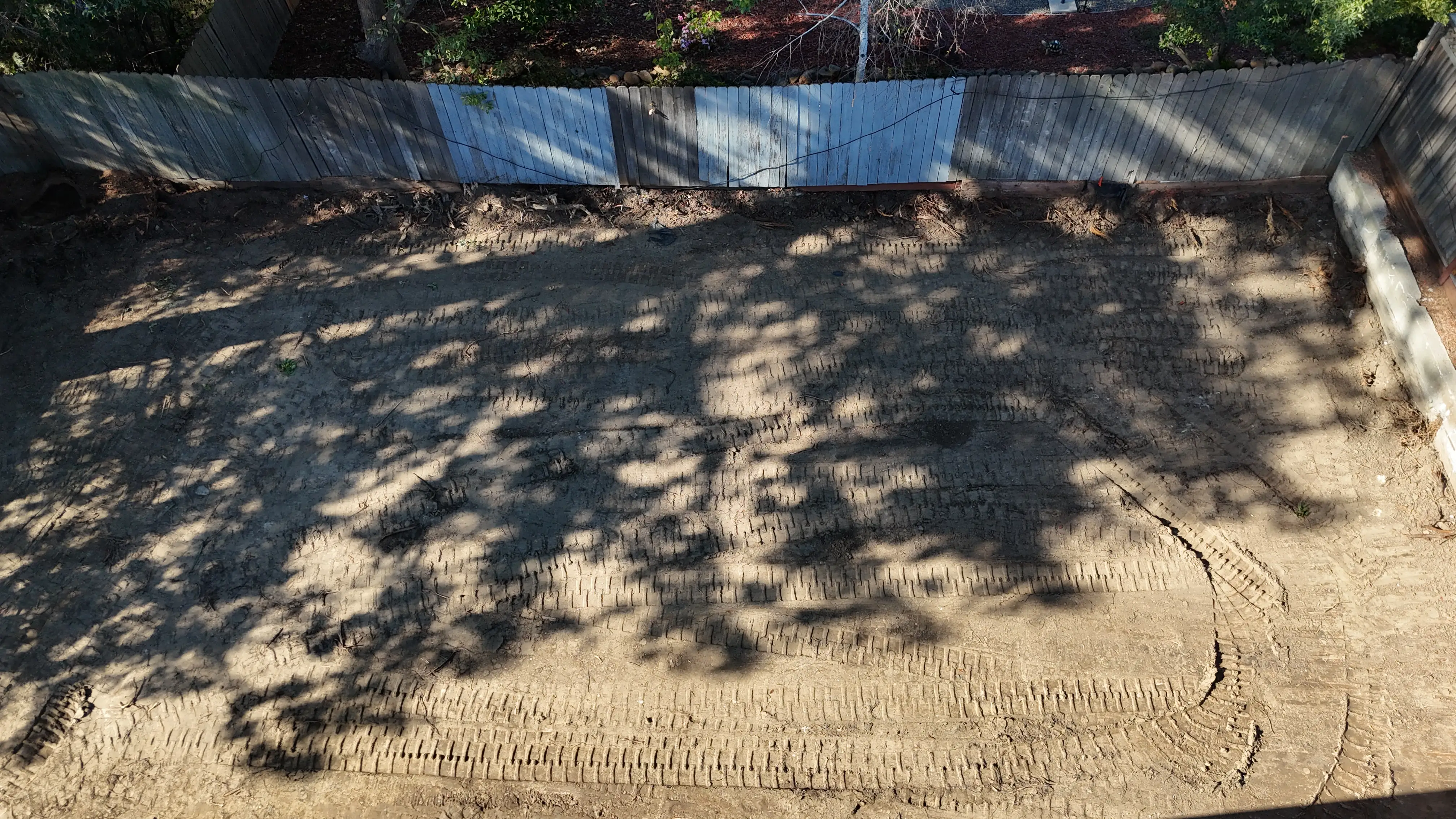
Checklist done, lot cleared.
Graded and ready for what comes next.
Pre-Demolition Checklist FAQs
What needs to be in place before demolition can start in Sacramento?
The demolition permit, the waste management plan, the asbestos survey with SMAQMD clearance on pre-1980 structures, confirmed utility disconnects, and a secured site. Demo Patrol handles the permit, the air district filing, and the utility coordination as part of every demo quote.
What do you need to do before demolishing a house?
Confirm your jurisdiction, order the asbestos survey, file the permit with its waste management plan, send utility disconnect requests, decide what stays on the lot, prep site access, and schedule the teardown and haul-off. That is the full checklist this guide walks through.
What are the OSHA requirements for demolition?
OSHA requires an engineering survey by a competent person before demolition, plus controls for utilities, structural stability, falling debris, and crew protection. Demo Patrol crews are OSHA-10 certified and the same crew shows up to every job.
How long does the pre-demolition phase take?
Plan on roughly 4 weeks from signed quote to cleared lot on a typical residential job. Most of that is permit processing and utility scheduling, which is why the sequencing in this checklist matters more than the teardown itself.
Who handles the utility disconnects?
Demo Patrol coordinates SMUD and PG&E disconnects as part of the demo scope, starting from the permit application number the day the permit is filed. Water is capped at the house, and we confirm every service is dead before equipment moves.
About the reviewer
Spencer Farman is the owner and lead operator of Demo Patrol, a licensed California demolition contractor (CA Contractor #1117491). He quotes and runs every job himself, and this checklist is the same sequence his crew works through on every Sacramento teardown.


Last updated August 17, 2026. Permit costs and lead times reflect Sacramento County and City of Sacramento processes as of this date. Your jurisdiction sets the final requirements, which is why every quote starts with the address.
Hand Us the Checklist
Written quote within 24 hours. The permit, the air district filing, and the utility coordination are part of the job.
Want a number before you call? See an instant price range in about a minute.